Why STEAM?
Research shows integrated Science, Technology, Engineering, Art, and Math (STEAM) project-based learning is more than academic instruction—it cultivates creativity, collaboration, innovation, communication, and critical thinking skills that prepare students for real-world problem solving now and in future careers. (springer.com)

Life-Long Benefits
STEAM education—Science, Technology, Engineering, Arts, and Mathematics—helps children build the critical thinking, creativity, communication, and problem-solving skills they need for school and future careers. Research shows that hands-on, interdisciplinary learning increases student engagement and helps children better understand how subjects connect in real-world situations. Through STEAM activities such as coding, building projects, music, art, robotics, and design challenges, children learn to ask questions, experiment, collaborate, and think innovatively. Studies also show that integrated STEAM programs can improve motivation, creativity, and overall learning outcomes. (mdpi.com)
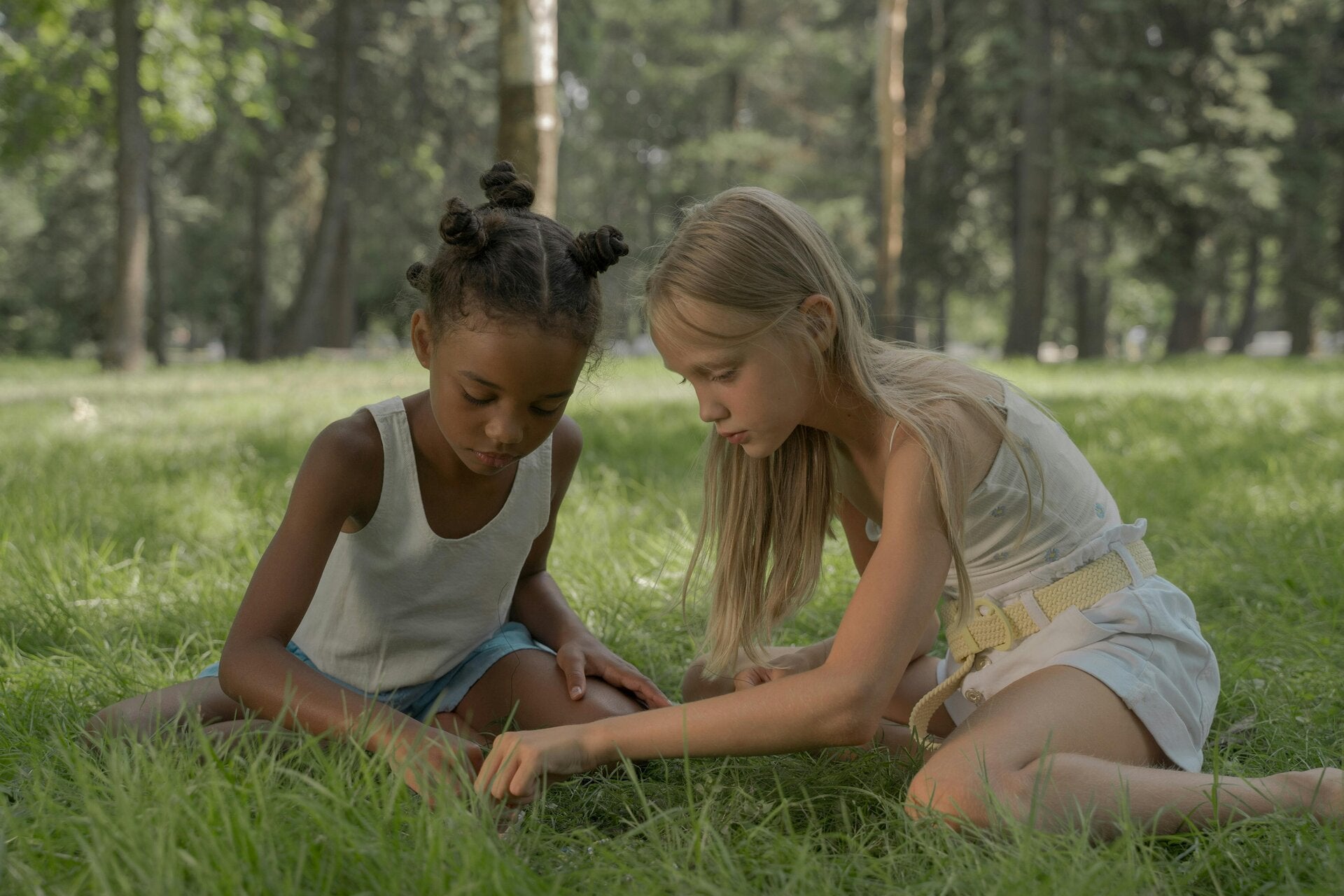
Girls in STEAM
Research consistently shows that encouraging girls in STEM and STEAM fields is important not because girls lack ability, but because many lose confidence and representation as they grow older despite performing just as well academically as boys.
Studies have found that supportive STEM environments, mentorship, hands-on learning, and opportunities for creativity and problem-solving can significantly increase girls’ confidence, interest, and long-term participation in science, technology, engineering, arts, and mathematics fields. STEAM education is especially valuable because it combines creativity, collaboration, and real-world application, helping students see themselves as capable innovators and problem-solvers (frontiersin.org)
Researchers have also found that girls who participate in STEM programs and mentoring opportunities are more likely to pursue advanced STEM courses, develop stronger academic self-confidence, and envision themselves in future STEM careers. Increasing representation of girls in STEM matters not only for equity, but because diverse perspectives lead to more innovative ideas, inclusive design, and stronger problem-solving in the industries shaping our future. (researchgate.net)

Why add "A" for Art?
The “A” in STEAM is especially important because the arts strengthen skills that traditional STEM education alone may not fully develop. Creativity, visual thinking, storytelling, design, and emotional expression all play a major role in innovation and problem-solving. Research has found that adding the arts to STEM education supports creative thinking, communication, and student engagement while helping children approach challenges from multiple perspectives. Many modern careers—including engineering, architecture, animation, healthcare, technology, and product design—require both technical knowledge and creative thinking. STEAM education helps children become adaptable learners who can combine analytical skills with imagination and collaboration. (mdpi.com)

Bibliography
-
Aguilera, D., & Ortiz-Revilla, J. (2021). STEM vs. STEAM Education and Student Creativity: A Systematic Literature Review. Education Sciences, 11(7), 331. (mdpi.com)
-
Ashlock, Jennifer, et al. (2021). “Gender Differences in Academic Efficacy across STEM Fields.” Sociological Perspectives. (journals.sagepub.com)
-
Conradty, C., & Bogner, F. X. (2020). STEAM teaching professional development works: effects on students’ creativity and motivation. Smart Learning Environments, 7(26). Springer. https://doi.org/10.1186/s40561-020-00132-9(link.springer.com)
-
“Girls in STEM: Is It a Female Role-Model Thing?” (2020). Frontiers in Psychology. (frontiersin.org)
-
Heaverlo, Carol. (2011). STEM Development: A Study of 6th-12th Grade Girls’ Interest and Confidence in Mathematics and Science. Iowa State University. (researchgate.net)
-
Heaverlo, Carol, Cooper, R., & Laanan, F. S. (2013). “STEM Development: Predictors for 6th-12th Grade Girls’ Interest and Confidence in Science and Math.” Journal of Women and Minorities in Science and Engineering.(researchgate.net)
-
Martinez-Garcia, Alicia, et al. (2022). “The Impact of STEM Based Programs on Girls and Women.” Proceedings of IMPRS. (journals.indianapolis.iu.edu)
-
National Science Foundation. (2020). When Science Meets Art: 6 NSF Research Projects That Turn STEM into STEAM. (nsf.gov)
-
Sanz-Camarero, R., Ortiz-Revilla, J., & Greca, I. M. (2023). The Impact of Integrated STEAM Education on Arts Education: A Systematic Review. Education Sciences, 13(11), 1139. (mdpi.com)
-
Smith, B. K. (2013). STEM to STEAM: Developing New Frameworks for Art-Science Pedagogy. American Association for the Advancement of Science Conference Proceedings. (researchgate.net)
-
Stoeger, Heidrun, et al. (2013). “The Effectiveness of a One-Year Online Mentoring Program for Girls in STEM.” Computers & Education, 69, 408–418. (gap.hks.harvard.edu)